Seam quality explained: criteria, characteristics and performance
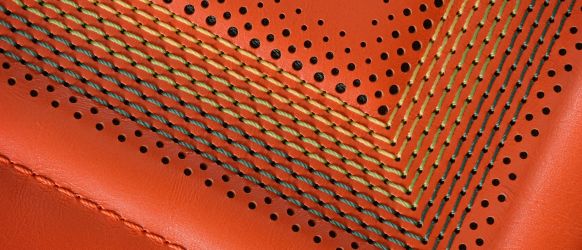
The term “quality” indicates the extent to which a product meets specific requirements. In the general understanding of quality in the sewing industry, seam quality is usually decisive for product quality.
Considering the variety of sewn products and their areas of application, it becomes clear that different requirements are placed on the seams. For example, the seat seam of a pair of jeans must have a different stability than the seams of an airbag.
A requirements profile for the respective seams must be developed depending on the application and function.
On the following Wiki pages, you can find out more about the various factors that affect the quality of a seam.
Conclusion
Seam quality is a key factor in product quality. The required seam performance must always be defined according to the product’s function and application.
Seam stability
Intro
To assess seam stability, it is important to test the seam's resistance to slippage and its seam breaking strength.
Seam slippage behaviour refers to the tendency of the warp and weft threads of a fabric to shift relative to each other in the seam area when tensile forces are applied transversely to the seam direction. Low seam slippage resistance leads to the fabric opening up in the seam area.
The seam slippage behaviour depends on the fabric and can therefore only be minimally influenced by changing the sewing conditions. Additional topstitching of stressed seam positions, selecting a different seam type (e.g. using felled seams or safety seams), using the highest possible stitch density, using the widest possible seam allowance, taping of the fabric in the seam area with a heat-bonded tape; additional trimming of the particular layers of fabric. The sewing thread used has no influence on the seam slippage behaviour. As a rule, the fabric manufacturer is required to optimise the seam slippage behaviour.
Seam breaking strength refers to the resistance of seam to tensile stress applied in crosswise direction to the seam. If the seam breaking strength is insufficient, the seams will tear during subsequent use. A well-known practical example of this is burst seat seams.
The seam breaking strength is determined by the fabric, the sewing thread and the sewing parameters. The basic level of seam strength is initially determined by the tear strength of the fabric. In addition, the choice of sewing thread is the primary factor in determining the achievable seam strength. The raw material, construction and thickness determine the strength level (maximum tensile force) of the sewing thread and thus the strength of the seam. For example, a coarse polyester continuous filament thread has a significantly higher tensile strength than a fine cotton spun. The maximum tensile force specified on the product data sheets helps with an initial assessment.
When selecting sewing parameters, stitch density, stitch type and thread balance in the seam have a major influence on the seam breaking strength. Increasing the stitch density from 4 to 5 stitches/cm, for example, improves the seam breaking strength by approx. 25% when using a double chain stitch with Saba 120. When comparing the most important stitch types for joint seams, the double lockstitch and the double chain stitch, the double chain stitch has clear advantages due to its higher seam elasticity. The optimum thread balance for the double lockstitch is achieved when the needle thread and bobbin thread are of equal length.
Seam elongation
Intro
Seam elongation refers to the elasticity and stretching behaviour of a seam when subjected to tensile stress along the seam. It is primarily determined by the thread stock in the seam. This depends on the choice of stitch type, stitch density and stitch balance. The trend towards close-fitting and comfortable clothing requires a high level of manufacturing expertise with regard to stretchable materials in general and elastic seams in particular. AMANN has developed Sabaflex, a highly elastic sewing thread, for this purpose. The seam elongation can be tested in accordance with DIN EN ISO 13934-1 (simple strip method).
Seam haptics
Intro
Haptics refers to tactile perception and is also known as ‘touch’ in practice. There are objective measurement methods for assessing textile surfaces, but not for seams. Seams are assessed exclusively subjectively, i.e. through manual inspection or wear tests.
For clothing that is worn close to the skin, soft seams and a soft touch are very important. This is a particularly important quality feature for lingerie and sportswear manufacturers. For striking seams on leather products and accessories, on the other hand, a robust sewing thread that matches the material is often used.
The seam haptics or feel of the seam is influenced by the fabric, stitch type and sewing thread:
- Depending on the fabric, the seam sinks into the sewing material and is more or less noticeable.
- The choice of stitch type determines the amount of thread on the top and bottom of the fabric (example: low seam presence with a single-needle double lockstitch, high seam presence with a multi-needle overlock stitch). The type and position of the stitch formation in the fabric affect the softness of the seam. The double chain stitch feels rougher on the bottom of the fabric than the double lockstitch, where the stitch formation is in the centre of the fabric, due to the looper thread chain.
- The sewing thread has an enormous influence on the feel of the seam. The feel can be changed by varying the ticket number and construction. Fine tickets, such as Serafil fine 300, are significantly less noticeable than coarse tickets, such as Serafil 10. Textured microfilaments, such as Sabasoft, with their voluminous, soft character, give a different ‘seam feel’ than Serabraid, the braided continuous filament thread.
Due to the aforementioned influencing factors, sewing tests are recommended prior to production if a specific seam feel, such as a soft seam, is desired.
Seam abrasion resistance
Intro
The appearance of the seam is a special quality criterion, as it can be assessed subjectively. In most cases, a seam only stands out when it is not well done. There are many possible reasons for this. In addition to the correct choice of sewing thread, needle and fabric, correct handling and the use of suitable machines are also decisive for the final seam quality.
Seam appearance
Intro
The appearance of the seam is a special quality criterion, as it can be assessed subjectively. In most cases, a seam only stands out when it is not well done. There are many possible reasons for this. In addition to the correct choice of sewing thread, needle and fabric, correct handling and the use of suitable machines are also decisive for the final seam quality.
Seam puckering
A visible, wavy appearance on one or both sides of the seam is rarely desirable. Seam puckering is one of the most common processing problems in garment manufacturing. It can occur immediately after sewing, during ironing or pressing, or only after a short rest period along the seam or in certain areas of the seam. In practice, puckering is assessed visually and evaluated using a photo scale.
Seam marks
Seam marks visible on the outside are a well-known processing problem with fine fabrics. They occur when the seam allowances and/or sewing threads leave marks when the closing and serging seams are ironed.
Poor coordination of sewing thread and fabric
Sewing thread construction and ticket number often do not ideally emphasise the character of the fabrics and designs. If the sewing thread, needle size and fabric are not optimally matched, material damage can occur, for example, due to the use of needles that are too coarse. This damage usually only becomes visible after the first wash, when the fabric threads along the seam are brushed up.
Incorrect thread balance
As soon as the thread balance deviates from the ideal, an uneven seam pattern results, which is generally unacceptable for visible seams. The following illustration shows the appearance of a poor thread balance in a double lockstitch seam.
Poor colour matching
Unwanted colour differences in tone-on-tone stitching are easy to spot. This problem is less noticeable with contrasting coloured seams.
The following is important for achieving the optimum colour match between sewing thread and fabric:
- Colour matching, taking into account the metamerism effect
- Comparison of colour fastness between fabric, sewing thread and other materials
- Use of trained personnel with a keen sense of colour
Seam grinning
Even to the untrained eye, so-called grinning or protruding seams indicate that something is wrong with the processing. This mainly affects joining seams that are subject to heavy wear, such as seat seams. When a seam grins, the stitching between the two seam edges becomes visible.
When tension is applied across the direction of the seam, the sewing threads appear in the form of a ladder. Possible causes include poor thread balance, thread tension that is too loose or insufficient stitch density.
Conclusion
Seam appearance has a major impact on the perceived quality of a sewn product. A well-balanced combination of sewing thread, fabric, needle and sewing parameters helps prevent visible defects and ensures a clean, high-quality seam.
Product dependant
Intro
In addition to the standard quality criteria, there are a number of product-dependent requirements. This applies in particular to the manufacture of technical textiles. Depending on the required functionality, sewing threads have to fulfil a wide variety of tasks. The following examples illustrate the broad spectrum:
- Heat-resistant seams for heat protection clothing
- Weather-resistant seams for outdoor textiles
- Chemical-resistant seams for chemical protective clothing
- Conductive seams for conductive textiles
- Waterproof seams for rain protection clothing
- Dyeable seams for garment dyeing
A specific requirement profile makes it easier to select the right sewing thread for perfect seam quality.
Care properties of sewing threads
Care properties
When it comes to the care properties of sewing threads, the quality requirement is simple: the sewing thread must meet the care requirements of the fabric. The outer fabric and sewing threads must be compatible with each other.
AMANN's high-quality sewing threads can generally meet this requirement for care for all fabrics – whether washing, bleaching, drying, ironing or professional textile cleaning. Often, the care resistance of the fabrics is lower than that of the sewing threads. There are only a few restrictions, mainly when ironing due to raw material-dependent temperature resistance.
In the case of contrast processing and extreme care conditions, such as hospital laundry or workwear, the care resistance of the seams must be checked individually.
Individual quality criteria
Individual quality criteria
In addition to the standard quality criteria, there are a number of product-dependent requirements. This applies in particular to the manufacture of technical textiles. Depending on the required functionality, sewing threads have to fulfill a wide variety of tasks. The following examples illustrate the broad spectrum:
- Heat-resistant seams for heat protection clothing
- Weather-resistant seams for outdoor textiles
- Chemical-resistant seams for chemical protective clothing
- Conductive seams for conductive textiles
- Waterproof seams for rain protection clothing
- Dyeable seams for garment dyeing
A specific requirement profile makes it easier to select the right sewing thread for perfect seam quality.